Follow the Bendway
The maintained network links widened cavern paths, river trails, bridges, freight approaches, marked junctions, and older routes. Most regional travel touches it eventually.
Explore the Bendway →

The Deep RangeThe Three BendsThree settlements. One living region.

Stonewater, Fern Hollow, and Lantern Crossing share one river, one maintained route network, and more mutual dependence than any of them would admit before breakfast.
Meet the settlements below
One river, three centers
Stonewater turns water into power and skilled fabrication. Fern Hollow keeps herds, dairy, and living pasture productive. Lantern Crossing moves goods, travelers, information, and greenhouse produce through the region. The river and Bendway carry the exchange between them.
Waterworks, power, mills, fabrication, and the machinery that keeps the region moving.
Living BendHealthy pasture, mixed herds, dairy work, ranching, and food raised from the warm dark.
Eastern CrossingMarkets, greenhouses, freight, couriers, travelers, and the routes leading beyond the region.
Choose a trail
Read the land first, follow the route connecting it, then step inside each settlement and the daily life shared between them.
See how the three settlements, their river, and the surrounding region fit together.
02Routes, travel, stopping points, maintenance, and the closures that reshape a journey.
03The northern power and technical center built around clean water and constant machinery.
04The broad living basin where pasture, livestock, food, and range health shape daily life.
05The eastern market, greenhouse center, transit hub, and gateway beyond the Three Bends.
06Trade, travel, and the ordinary routines that turn three settlements into one region.
Regional Atlas
Switch maps, zoom in, and drag across the image. The regional view shows how the Three Bends connect; the settlement views let you inspect each center more closely.
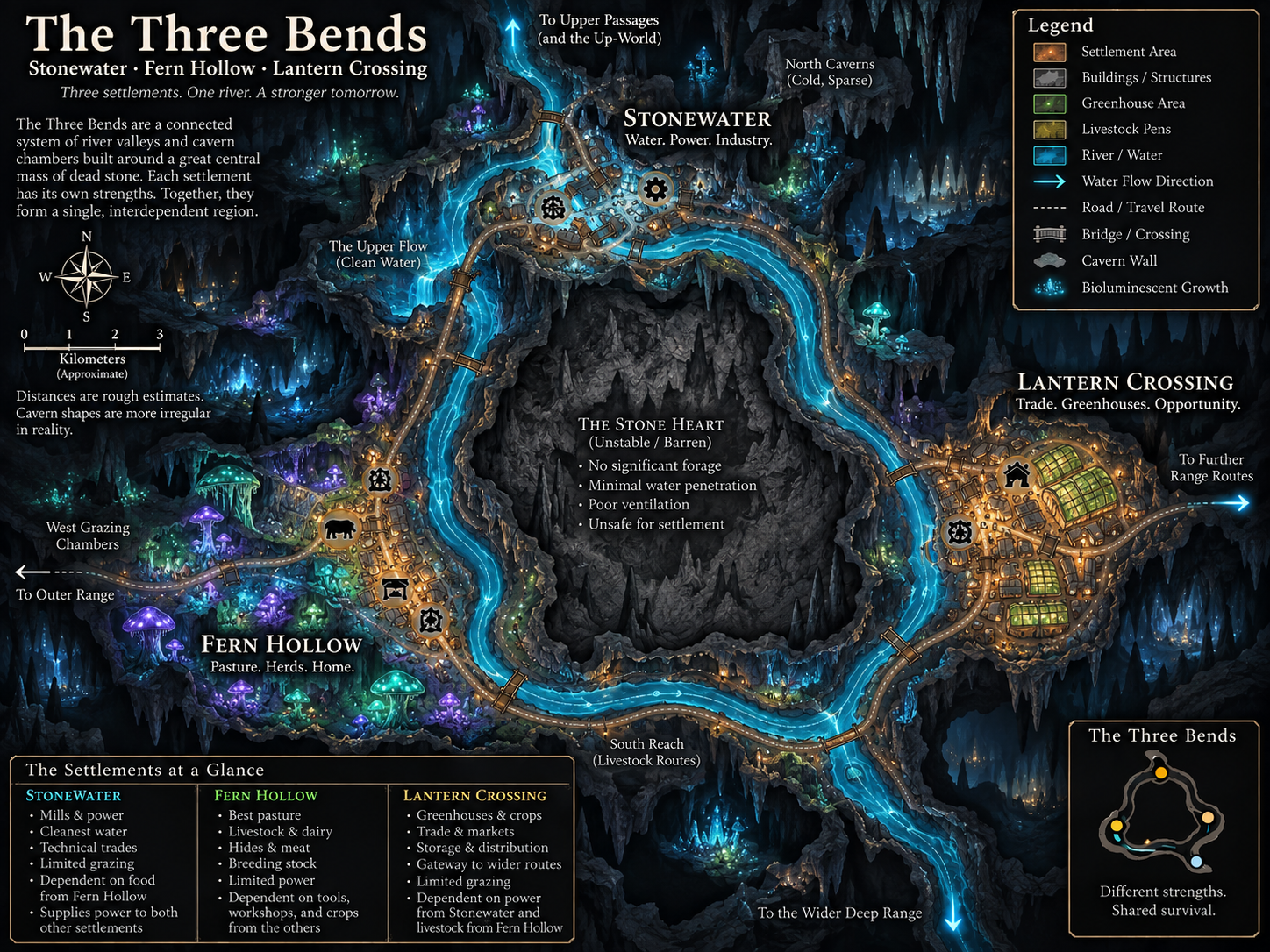
Regional orientation: three settlements joined by the river and the Bendway.
Drag to pan after zooming. Use the buttons or your mouse wheel to zoom. Press Escape to close the expanded view.
A map is the beginning, not the answer
A straight line means very little when rock, water, bridges, animal traffic, and yesterday's collapse all get a vote. These maps orient you; current route knowledge gets you there.
The maintained network links widened cavern paths, river trails, bridges, freight approaches, marked junctions, and older routes. Most regional travel touches it eventually.
Explore the Bendway →People measure routes by turns, crossings, and known stopping points. “Two hours off the Bendway” is usually more useful than a neat geometric distance.
Stonewater is harder and more engineered, Fern Hollow opens into stock country, and Lantern Crossing gathers the heaviest traffic before routes branch into the wider Range.
The road that makes three settlements one region
Not one road, but a maintained web of cavern paths, river trails, bridges, freight approaches, marked junctions, and older routes connecting Stonewater, Fern Hollow, and Lantern Crossing.
Route conditions can change faster than a confident traveler can admit they were wrong.
Route
The oldest stretches began as practical trails between water, grazing chambers, crossings, and early settlements. Generations of widening, bridging, reinforcement, collapse, and repair gradually joined them into the route network recognized today.
Harder, wetter, and more engineered, with retaining walls, drainage channels, machinery approaches, and reinforced crossings.
Broader stock country, with grazing turnoffs, watering access, warning markers, animal crossings, and side routes into working range.
The busiest section, where caravan lanes, freight staging, market approaches, and outward trade routes gather before branching deeper into the Range.
Maintenance is shared. Each settlement cares for nearby infrastructure, while Rangers, repair crews, freight operators, and neighboring communities coordinate work on common stretches.
Travel
The Bendway carries riders, freight teams, livestock drives, couriers, Rangers, survey crews, medical wagons, traders, and travelers on foot. Conditions can change quickly, so good judgment includes checking current reports and leaving room for anything too heavy to stop politely.
Closures
Closures disrupt food, livestock, medicine, replacement machinery, greenhouse supplies, mail, and travelers. That cost is taken seriously, but it does not justify keeping an unsafe stretch open.
Regional consequence: some alternate routes are much slower or cannot handle large freight. A serious failure can affect all three settlements within days.
People meet there, news travels there, regular crews learn one another's schedules, and warnings are left for whoever comes next. It is ordinary enough to be taken for granted and important enough that everyone notices when it fails.
Northern Bend
Built where the shared river enters the inhabited basin with its strongest, cleanest flow, Stonewater turns moving water into power, tools, repairs, and the technical capacity that keeps the Three Bends working.
The mechanical heart
Stonewater does not merely sit beside water. It separates drinking channels from industrial flow, controls and protects the river, converts useful drops into mechanical and electrical power, then feeds that capacity into workshops and the wider region.
Intakes, gates, sluices, pumps, filtration, drainage, and monitoring keep clean water protected and useful flow directed.
Wheels, turbines, mills, generators, and controlled drops turn river force into mechanical work and electricity.
Mechanics, millwrights, electricians, metalworkers, and repair crews maintain the equipment everyone depends upon.
Power supports pumps, clinics, workshops, communications, UV facilities, settlement lighting, and Lantern Crossing's greenhouses.
Princess Spotlight
Stonewater's power-network family
The Soledad family owns the water-wheel network responsible for generating much of the Three Bends' electricity. Rubi stands between those holdings, Stonewater's technical workforce, and the settlements relying on dependable power for pumps, clinics, workshops, communication, and greenhouse lighting.
She may not be the engineer turning every wrench, but her family position makes her responsible for protecting and coordinating one of the region's most essential shared resources.
Stonewater Places
Water and machinery occupy the lower working levels. Workshops spread across reinforced terraces. Animals and public buildings stay above ordinary flood risk, while homes climb into quieter protected ground.
How it fits together: Headwater Works controls incoming flow, Bluewheel converts it into power, industrial routes feed Hammer Row and Ironwheel, Survey House watches the stone, and higher terraces protect animals, public life, and homes from water and machinery.
Stonewater character
Stonewater respects people who understand how things work, maintain their tools, finish repairs properly, keep promises, and do not leave expensive problems for the next shift. Infrastructure makes irresponsibility public. One careless shortcut can interrupt systems serving hundreds of people.
Stonewater is not the capital and does not command the other Bends. It is one-third of a regional system, the mechanical heart that works only because Fern Hollow feeds it and Lantern Crossing connects it.

The Three Bends · Southern Basin
The broadest and greenest of the Three Bends is not merely farmland. Fern Hollow is a living system of pasture, water, animals, fungi, and working families who know that feeding a region means caring for everything beneath its feet.
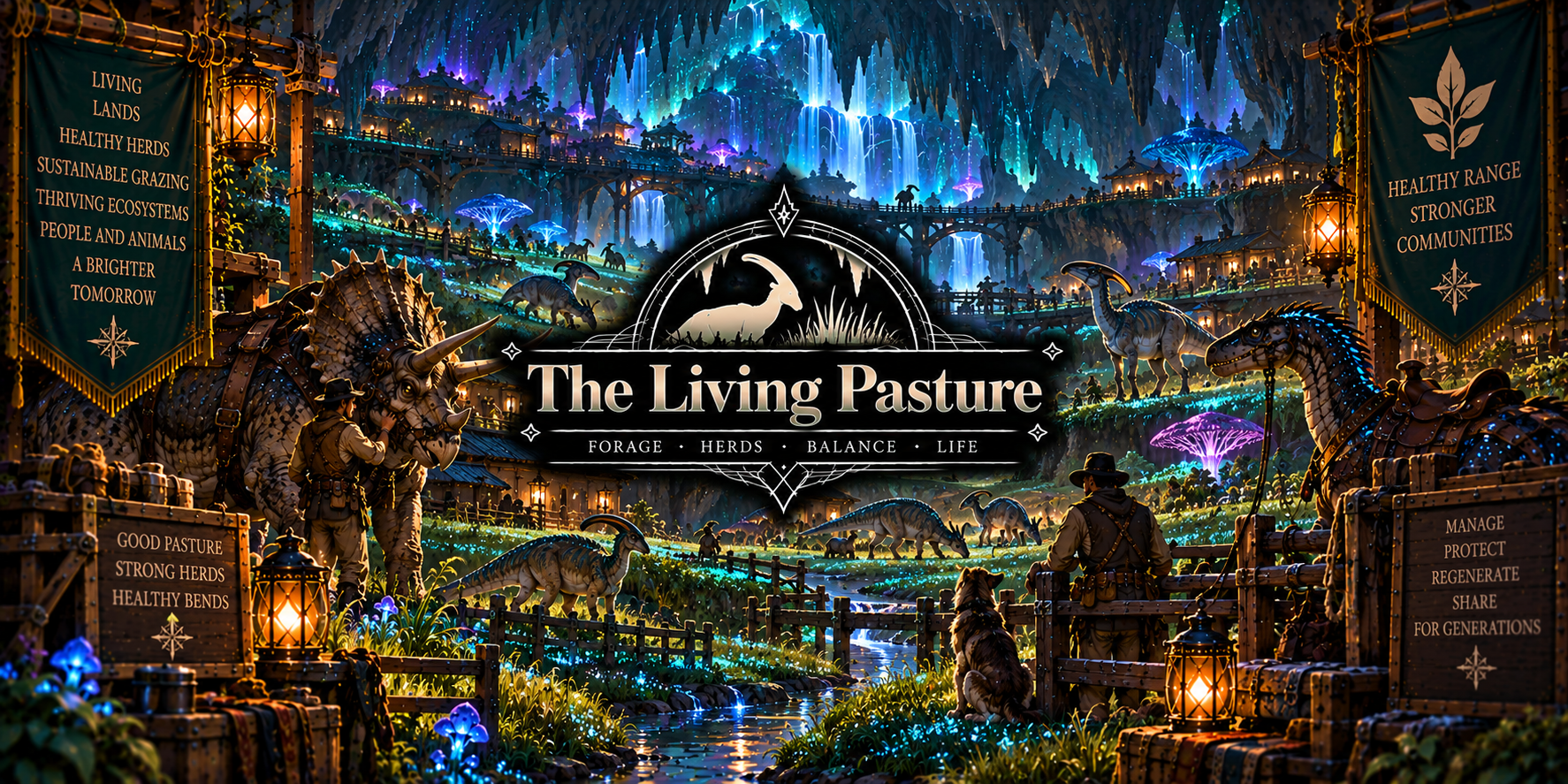
Fern Hollow watches fungal condition, mineral bloom, water quality, insects, herd behavior, predators, and even stone temperature. Grazing land is rotated because pasture is a living resource that can be worked, exhausted, rested, and healed.
Read glow, moisture, growth, tracks, and animal behavior before moving a herd.
Match stock, herd size, and timing to what the chamber can safely carry.
Shift animals before roots, fungal mats, microbial crusts, and water edges are stripped.
Leave the ground quiet long enough for the Mineral Web and pasture community to rebuild.
Guanacos provide everyday meat, fiber, pack work, and limited milk. Lumen Horn Bison are the major dairy animals, supplying milk, cheese, fermented dairy, cooking fat, meat, hide, and occasional draft power.
Longcrests provide valuable range leather, sometimes preserving luminous patterns. Threehorn teams contribute heavy working strength where ranch labor demands it.
Hookclaw mounts handle scouting, pursuit, herd cutting, and long-distance work. Dire wolves apply close pressure, hold edges, flank stock, and guard at night.
Meat is smoked, dried, jerked, or preserved in fat. Fiber and hides become clothing, blankets, tack, saddles, protective gear, and tarps.

Princess Spotlight · Cyan
A Fern Hollow daughter who knows fiber from pasture to finished cloth.
The Bleu family owns the largest fiber mill and weaving house in the Three Bends. Kitty grew up shearing guanacos and gathering local fibers, including hemp, so the family trade is not a decorative title. She knows the labor before the loom.
Outside ties bring select luxury fabrics into the Bleu house, but its foundation remains Fern Hollow’s animals, plants, craftspeople, and practical need for cloth that can survive the Range.
The settlement spreads outward from social rooms and service houses toward nurseries, animal grounds, and the open Range. Tap a place to look inside.
Route-watch, dispatch, and field-response headquarters near the Bendway approach. Maps, reports, warnings, rescue gear, and emergency supplies pass through Sol Devrillo, Jace, and their crews.
Nye Billion’s center for examinations, treatment, and recovery. A rear wagon entrance gives injured travelers and working crews direct access without threading through the settlement.
August Pyrrhus’s home and research base for insects, small organisms, and ecological study. The attached field office, run by Nell, handles appointments, records, and intake.
The transition from settled Fern Hollow to the open Range. Warning boards, emergency caches, and field crews make it the last sensible place to reconsider a bad idea.
River Ashdove’s working herd grounds, including nursery and recovery areas for rejected or orphaned crias and the paddock used by Anchor.
Lirian’s seed stores, propagation beds, starter plants, and experimental growing plots. It helps turn fragile beginnings into crops sturdy enough for cavern life.
Shared temporary housing for livestock and working animals, with pens, stalls, quarantine space, and overflow capacity during drives, treatment, or bad route conditions.
Orielle’s warm-water bathhouse with laundry service and private rooms. Officially it cleans people and clothing. Unofficially it cleans absolutely nothing out of the gossip stream.
A flexible public room for lessons, shared meals, meetings, performances, and anything else the community needs. Its upright piano has survived both music and enthusiasm.
Minho’s practical public eating house, known for portable meals and reliable information. People come for food and leave knowing who arrived, who left, and which trail is acting suspicious.
Remy’s bakery and tea room, built for pleasant meetings, courtship, quiet conversation, and the strategic deployment of something sweet.
Noctis keeps contracts, accounts, debts, supply records, employment agreements, and shipment paperwork from turning the local economy into interpretive fiction.
An evening public house with music, food, drinks, and a louder, rougher social current than Fern Hollow’s daytime rooms.
Kurama Shibuya’s bookstore and repair shop, carrying manuals, maps, fiction, and poetry. It doubles as a quiet exchange point for knowledge that needs to travel farther than its owner.

Fern Hollow feeds the region, but it does not stand alone. Stonewater supplies tools, parts, repair, and technical expertise. Lantern Crossing brings greenhouse produce, seeds, imported goods, markets, and outside trade. Fern Hollow returns dairy, preserved meat, fiber, leather, trained animals, and hard-earned range knowledge.
The river serves animals, dairies, cleaning, processing, and homes. Controlled watering protects both the pasture and downstream Lantern Crossing.
Breeding, veterinary care, handling, training, and reading animal behavior are community knowledge, not background chores.
Fern Hollow can feed hundreds and still celebrate fresh greens. If the Mineral Web fails, no amount of confidence can manufacture healthy pasture.
A good season is measured by what remains: healthy animals, recovering ground, trained stock, clean water, and enough life left in the pasture to begin again.
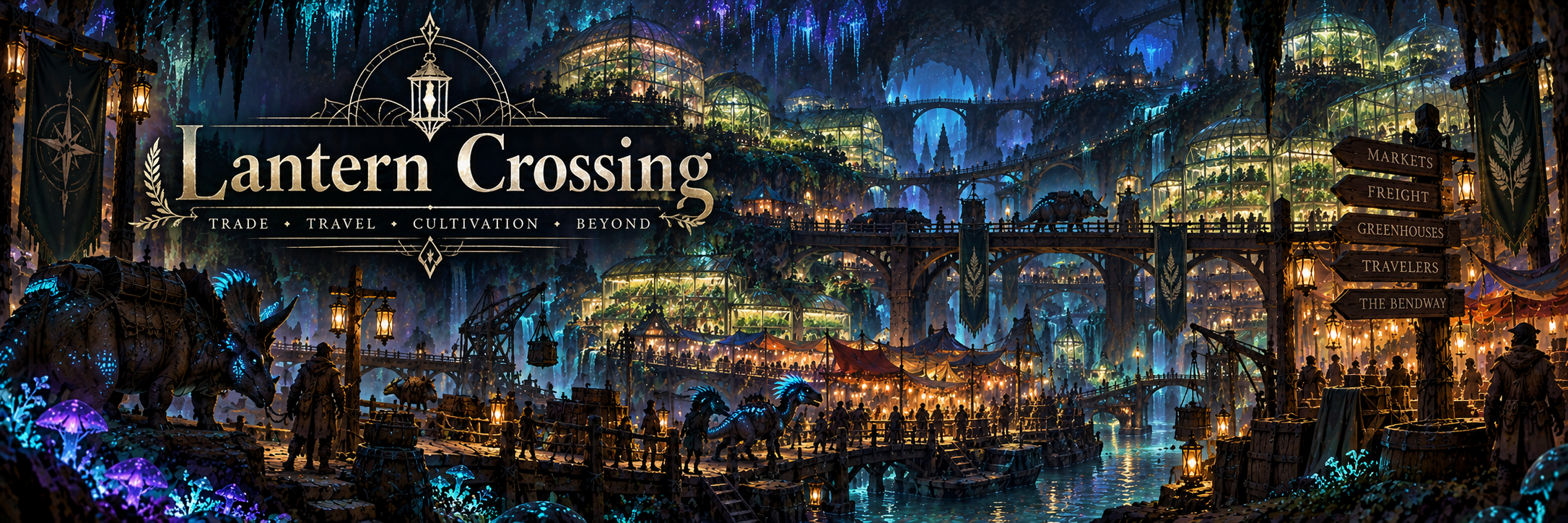
The Three Bends · Eastern Gateway
Where the shared river meets the outward roads, the Three Bends opens to the wider Range. Freight changes hands, greenhouses blaze beneath artificial suns, travelers trade news, and almost everything is going somewhere.
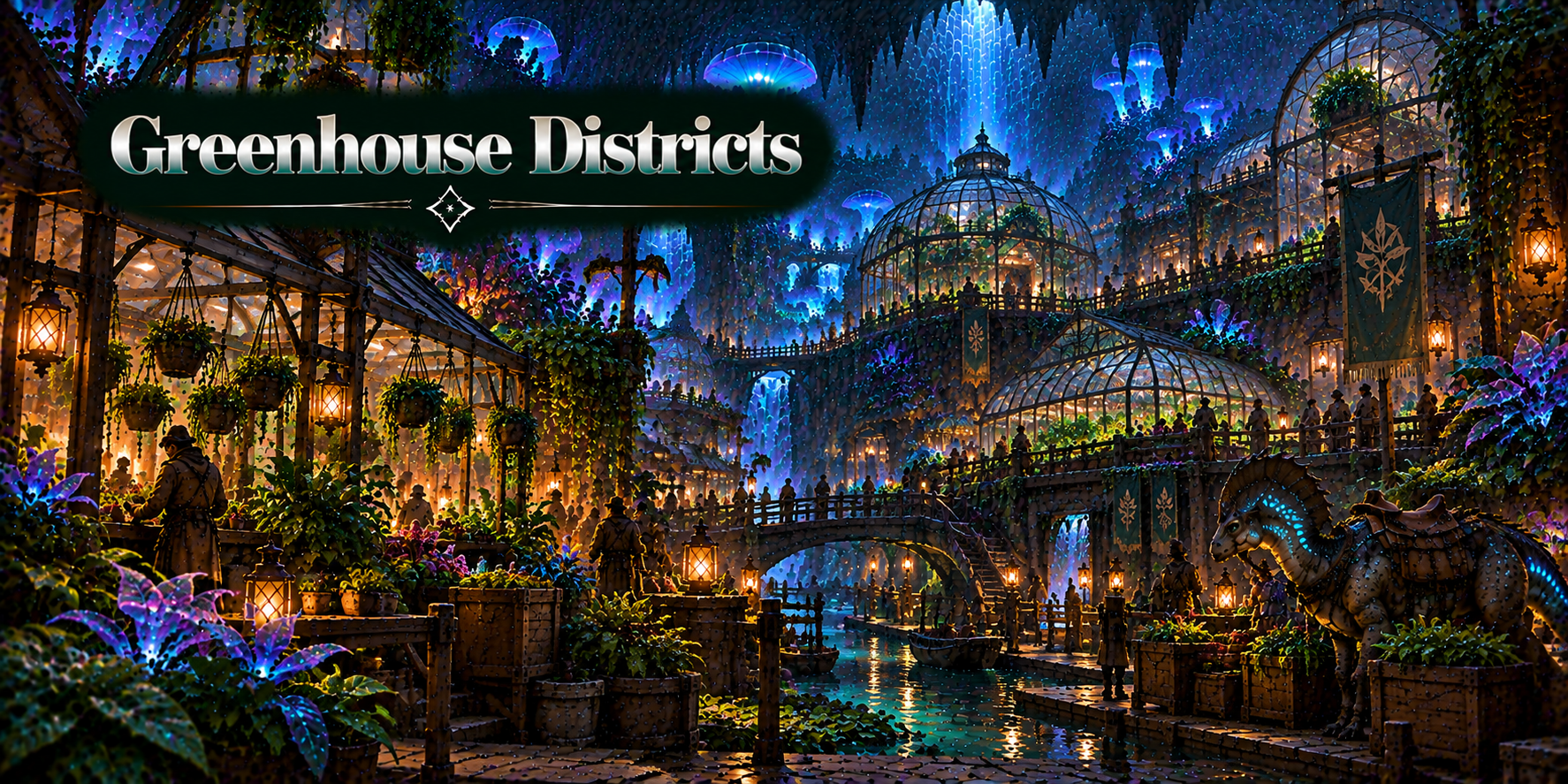
Lantern Crossing exists because routes converge here. River cargo, pack traffic, Hookclaw couriers, Threehorn freight teams, livestock drives, and outside caravans all meet, separate, and reorganize beneath the settlement’s greenhouse glow.
Goods, animals, travelers, rumors, and salvage enter through the Crossing.
Cargo is checked, livestock rested, routes reviewed, and delicate stock protected.
Loads move into markets, warehouses, greenhouses, freight teams, or river transport.
Regional products leave while scarce goods, seeds, parts, and information move inward.
Leafy greens, herbs, roots, beans, peas, berries, small vining fruits, cultivated fungi, eggs, seeds, and rare fruit add variety to a diet otherwise built around meat, dairy, preserved foods, and fungal staples.
Stable geothermal warmth, clean water, ventilation, power, pumps, and intense artificial light allow demanding crops and true fruit trees to survive underground.
Stonewater sends tools, repairs, machinery, and power. Fern Hollow sends meat, dairy, hides, fiber, and livestock. Lantern Crossing moves those goods outward and sends produce, seeds, eggs, salvage, and market access back.
Route closures, livestock prices, missing travelers, new salvage, distant conflicts, and market demand accumulate here. A warning may be worth more than the thing someone came to buy.

Princess Spotlight · Red
A guardian of harvests that cannot simply be replaced.
The influential Elios family owns and operates Lantern Crossing’s largest greenhouse complex. Adsila works within the agricultural systems that help feed the Three Bends, including crop production, rare cultivars, seed and cutting preservation, fruit trees, and protected dodo populations connected to tambalacoque cultivation.
Her work joins growers, animal keepers, traders, and freight crews. The goal is not merely producing food, but keeping fragile plant stock and agricultural knowledge alive long enough to reach the people who depend on it.
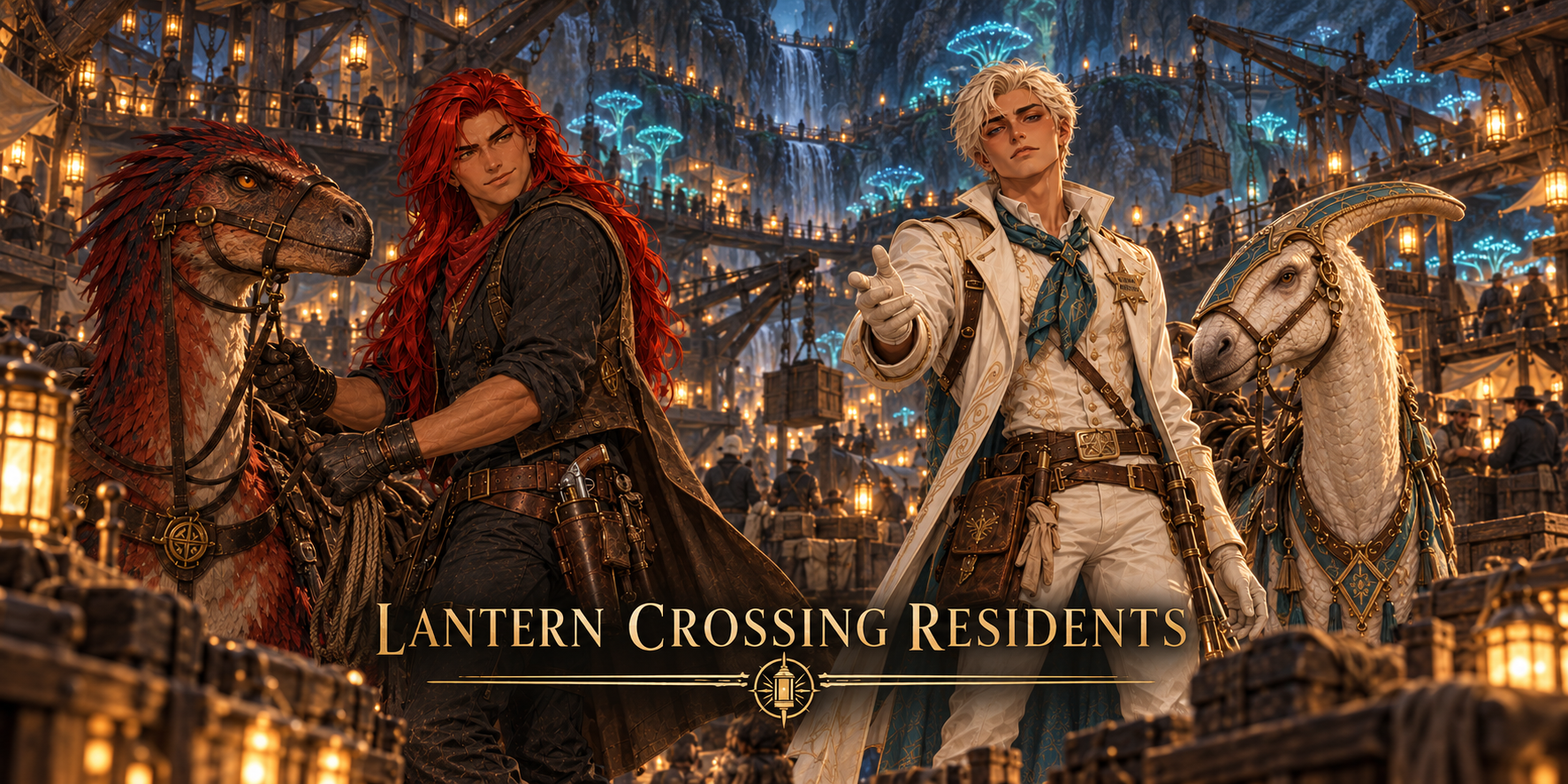
The settlement grows outward from its market into artisan lanes, caravan offices, freight yards, social rooms, and finally the maintained edge of the wider Range. Tap a place to look inside.
The commercial and social center, crowded with permanent shops, temporary stalls, carts, livestock pens, travelers, announcements, couriers, and arguments that somehow acquire audiences.
The working center for market and route administration. It holds steward desks, merchant registration, public records, current Bendway notices, arrival lists, warnings, and the Courier Board used by independent runners.
Kri Kurohana’s prominent tailoring house, specializing in alterations, decorative garments, difficult textiles, fitted riding wear, and display windows with absolutely no interest in being subtle.
The primary artisan lane, where tailors, dyers, binders, metalworkers, jewelers, printers, and other specialists turn incoming freight into things people actually want.
Noa’s controlled textile workshop for custom color, restoration, difficult materials, and bookbinding. Runoff is carefully managed to protect Lantern Crossing’s shared water.
A busy shop producing signs, route placards, handbills, notices, price boards, warehouse markings, and the occasional professionally typeset public grievance.
A mixed commercial and residential courtyard where brokers, guides, merchants, and crews negotiate contracts, transfer smaller loads, compare route reports, and ignore ordinary sleeping hours.
Lio’s polished office for arranging shipments, negotiating rates, combining loads, tracking arrivals, securing storage, and knowing who has spare capacity or concealed desperation.
The region’s largest freight facility. Cargo is checked, sorted, stored, transferred, repaired, or combined in broad lanes built for heavy wagons and Threehorn teams.
Reinforced pens, stalls, tack storage, watering stations, loading ramps, and strict handling lanes for draft teams, caravan mounts, livestock, and predatory working animals.
Yu-seong’s organized supply office for preserved food, feed, rope, lamps, repair materials, water containers, medical basics, trail gear, packing goods, and everything glamorous cargo forgets it needs.
Devlin Ward’s training and preparation base, with a central ring, tack rooms, equipment stores, readiness boards, crew space, and practical instruction for work beyond maintained streets.
The large-scale repair facility for wagons, axles, wheels, harness fittings, recovery rigs, cargo racks, and the suspiciously useful objects everyone was told not to throw away.
The settlement’s largest saloon and live-music venue. Food runs late, music runs later, and business conducted in Market Square is thoroughly discussed here afterward.
The practical edge where maintained streets and Bendway infrastructure split into routes leading deeper into the Range. Caravans assemble, loads are checked, warnings are posted, and last-minute messages arrive late with great commitment.

Lantern Crossing converts three connected settlements into part of a larger economy. It exports surplus, imports scarcity, distributes goods internally, produces crops unavailable elsewhere in quantity, and makes sure the region never becomes an island.
Markets, storage, freight, greenhouse harvests, outside goods, and fast-moving information give the region options it could not create alone.
Power failure threatens lamps and pumps. Dirty upstream water harms crops. Closed routes choke trade. A Fern Hollow livestock crisis changes what reaches every table.
Reliable merchants earn repeat work. Anyone who cheats, mishandles rare seeds, or misrepresents stock discovers that three linked settlements can spread a name at impressive speed.
Stonewater makes the greenhouse possible. Fern Hollow supplies the animal wealth. Lantern Crossing makes sure both can reach the wider world, and that the wider world can answer back.
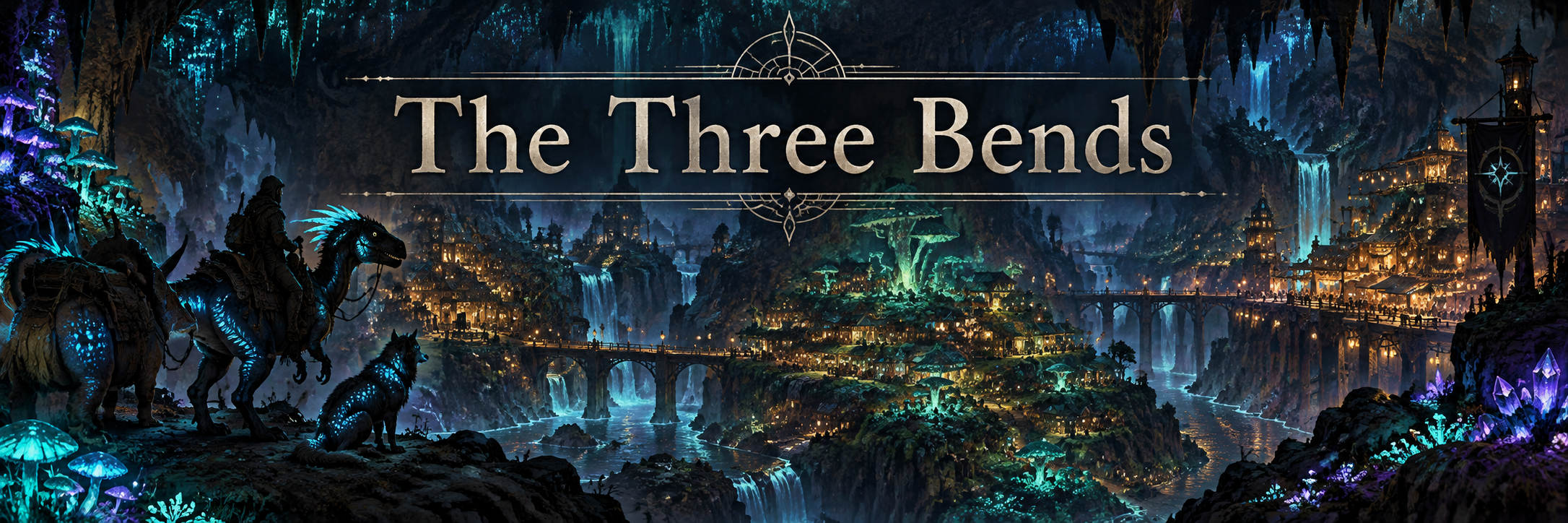
Three settlements · One working region
Stonewater makes and repairs. Fern Hollow raises, grows, and preserves. Lantern Crossing trades, distributes, and listens to the wider Range. The Bendway keeps their strengths moving, turning three settlements into one stubbornly interconnected community.
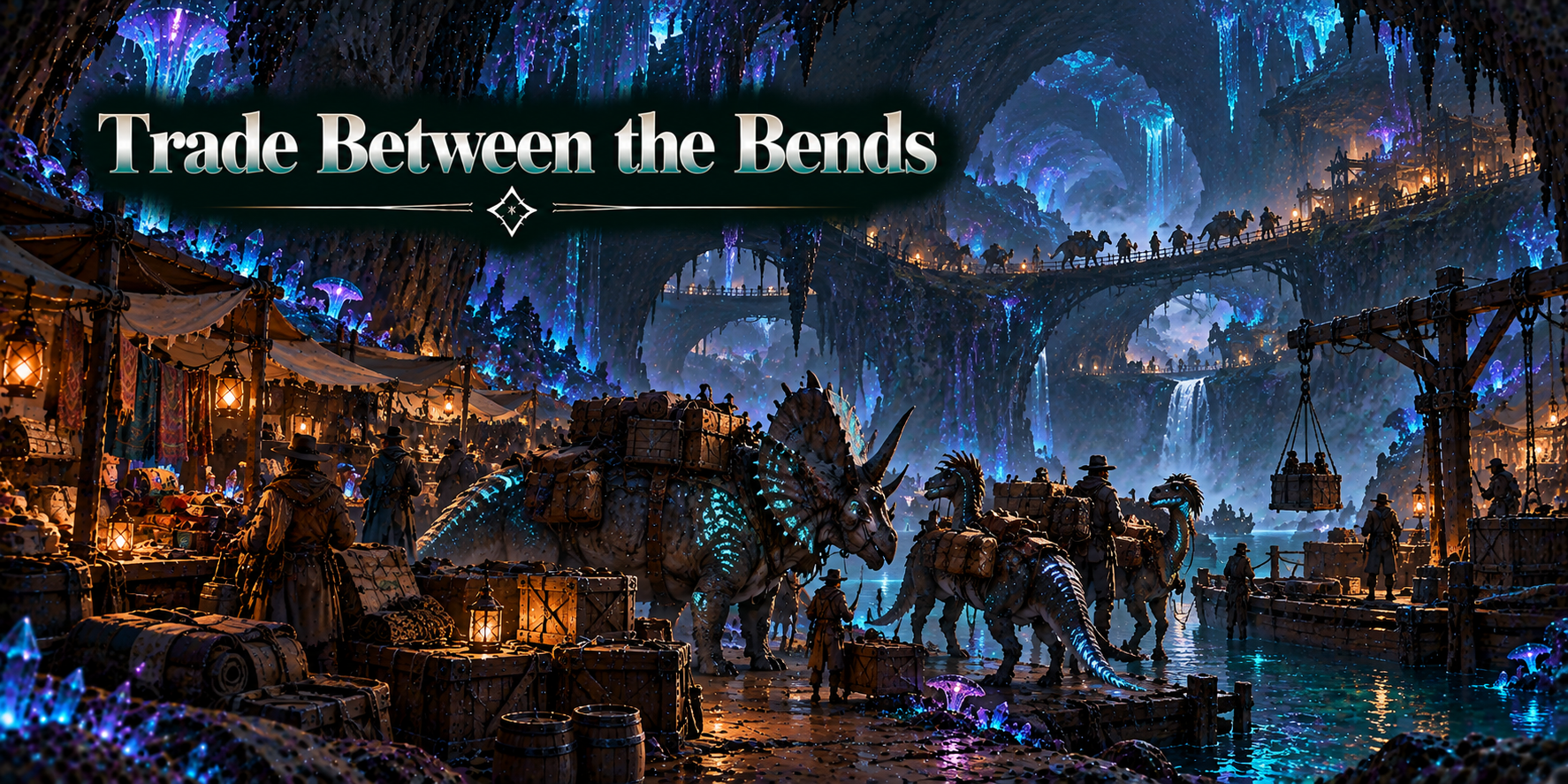
Trade follows productive basins, clean water, maintained routes, and the practical truth that no Bend produces everything it needs. Goods move in circles rather than simple one-way lines.
Sends tools, machinery, repaired equipment, technical skill, heavy infrastructure support, and power. It receives food, fiber, greenhouse crops, outside materials, and salvage worth rebuilding.
Sends meat, dairy, hides, fiber, livestock, breeding stock, trained animals, and range knowledge. It receives tools, repairs, seeds, vegetables, herbs, eggs, and access to outside markets.
Sends greenhouse produce, seeds, eggs, specialty crops, outside goods, information, and distribution. It receives power, animal products, freight, salvage, and everything the market can move onward.
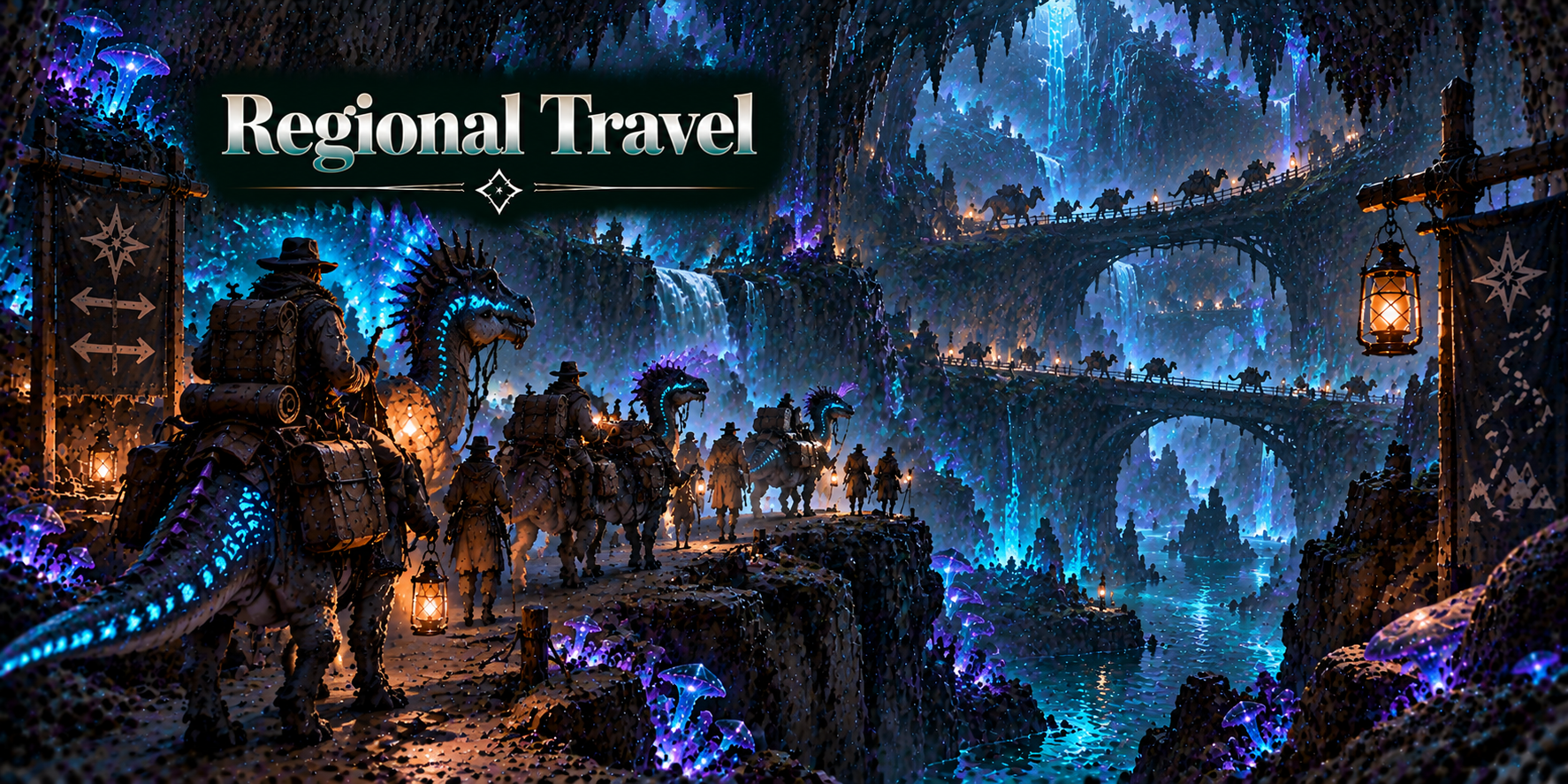
Most movement between the settlements eventually touches the Bendway, but travelers think in turns, bridges, stopping points, route conditions, and expected time rather than clean surface-world distance.
Hookclaw and Twincrest riders, Longcrest mounts, Sailrunners near suitable water, Threehorn freight teams, livestock drives, Rangers, couriers, medical wagons, repair crews, traders, and people traveling on foot.
Trail-watch stations, maintenance crews, Rangers, freight operators, couriers, and ordinary travelers share recent reports about flooding, collapse, bridge damage, animals, unsafe footing, contamination, and closures.
Fast riders yield where visibility is poor. Freight gets room according to load and stopping distance. Working animals are not approached without permission. Livestock may control an entire stretch.
Food, medicine, livestock, machinery, mail, and travelers are delayed or diverted. Secondary routes may be slower, narrower, rougher, or impossible for heavy freight.
The Bendway is safer than unmanaged Range. Nobody with sense mistakes that for safe.
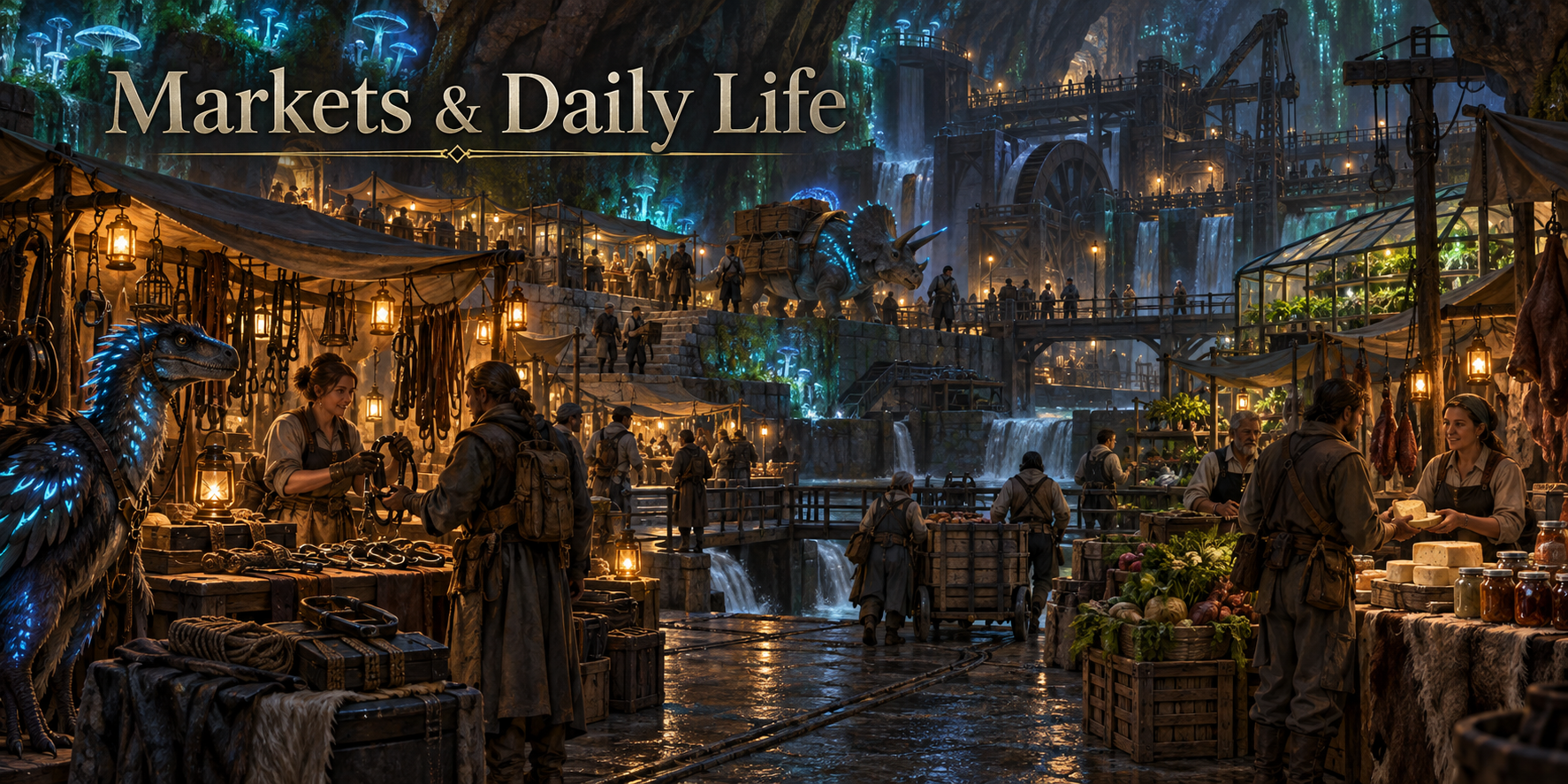
The Three Bends are cowboy country because livestock, mounted travel, freight, dangerous routes, and working animals still shape ordinary life. The culture survived because the work never stopped needing it.
Shifts follow water, machinery, milking, greenhouse lamps, market arrivals, animal care, freight schedules, and whatever the Range broke overnight.
Wide hats, boots, chaps, riding coats, tool belts, reinforced gloves, leather tack, and repair patches are practical first. Style arrives anyway because people remain people.
A traveler coming off a bad route is usually offered food, water, warmth, information, and attention for their animal. Help does not require blind trust.
Preserved staples mean stability. Fresh eggs, greens, and fruit reveal access, season, and generosity. Rare fruit can turn a meal into an event.
Markets, kitchens, bathhouses, saloons, clinics, repair yards, and trailhouses carry information almost as efficiently as official notices.
Trail songs, saloon performances, dances, and work tunes spread between crews. A sufficiently embarrassing incident is always one musician away from becoming history.
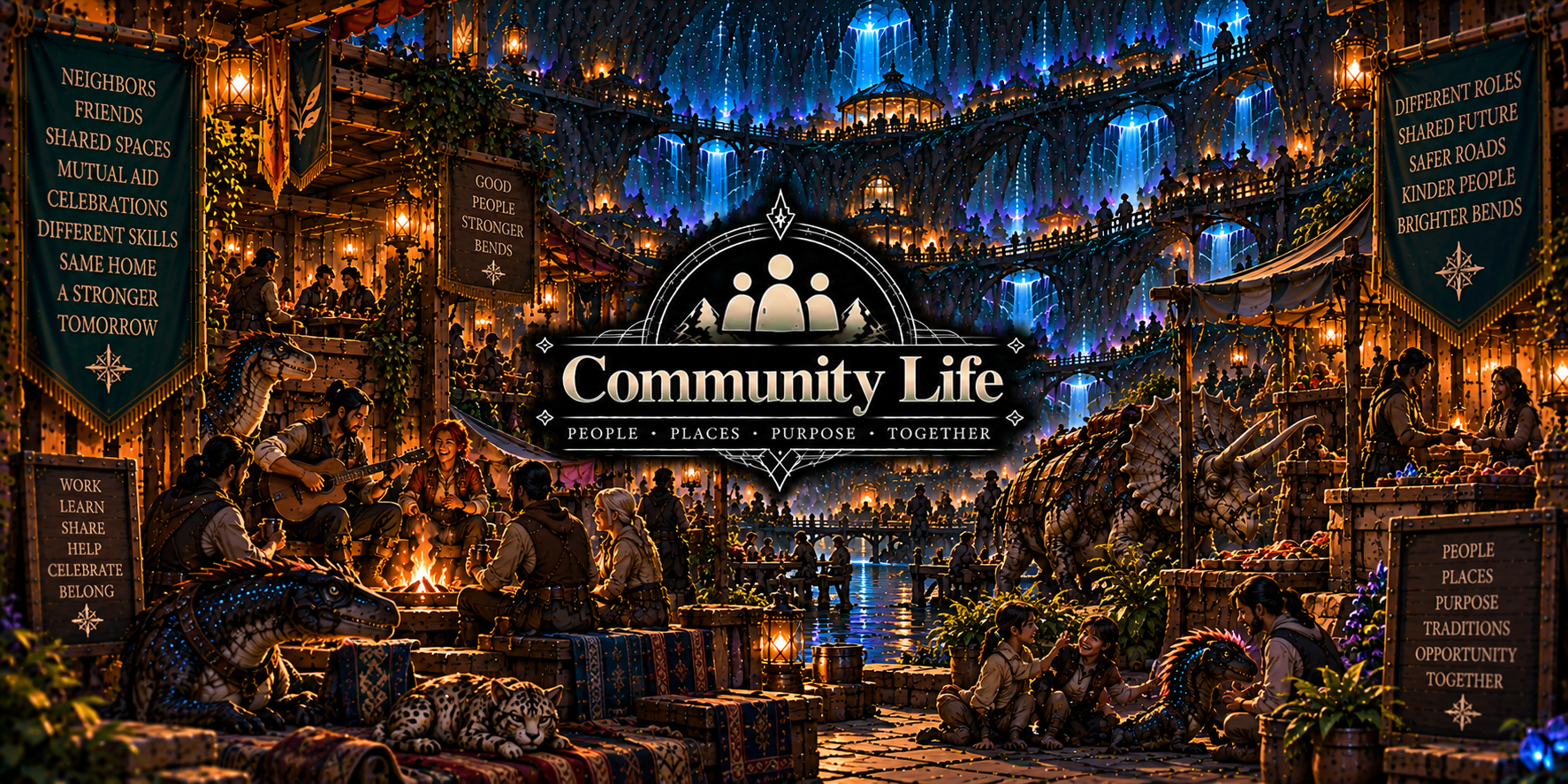
The Three Bends have no capital and no single settlement can act like the others are optional. Clean water, working power, healthy pasture, open routes, reliable trade, and recent information are regional concerns because trouble travels just as efficiently as goods.
Reputation grows from keeping promises, controlling animals, treating people fairly, respecting the Range, and doing useful work when conditions stop cooperating.
Mounts, draft teams, livestock, working wolves, aviary birds, and companion animals shape schedules, streets, businesses, stories, and social standing.
The region is large enough to contain strangers and connected enough that good work, bad deals, heroic rescues, and spectacular nonsense rarely remain local.
The Ranger needs the settlement. The settlement needs the Range. Between them move animals, food, materials, labor, knowledge, and news.